

AI scams targeting older adults are growing quickly, and many feel deeply personal. A phone call may sound exactly like your grandson in trouble. Artificial intelligence (AI) lets criminals copy voices, write polished messages, and create convincing fake videos in minutes. This free family prevention guide explains how these scams work and how to avoid them. For more articles, browse our AI scams category, or start with our overview of online fraud.
Table of Contents
- What Makes AI Scams Targeting Older Adults Different
- How AI Scams Targeting Older Adults Use Voice Cloning
- Deepfakes and Convincing Phishing Messages
- Examples of AI Scams Targeting Older Adults
- Warning Signs of AI Scams Targeting Older Adults
- How Families Can Prevent AI Scams Targeting Older Adults
- Create a Family Code Word
- Agree on Callback Rules
- Protect Social Media Privacy
- Precautions Against AI-Generated Phone Scams
- Comparing Common Scam Types
- Steps to Take After AI Scams Targeting Older Adults
- Family Checklist Against AI Scams Targeting Older Adults
- Frequently Asked Questions About AI Scams Targeting Older Adults
- Conclusion: Protecting Older Adults From AI Scams
What Makes AI Scams Targeting Older Adults Different
Scammers have always targeted trust, and AI scams targeting older adults build on that old tactic. Older adults often have savings and a habit of answering the phone. AI makes those tricks far more convincing. A message that once looked suspicious may now look routine. Scams targeted at seniors are no longer easy to spot from spelling errors alone.
The FBI’s Internet Crime Complaint Center (IC3) reported that Americans age 60 and older lost about $7.7 billion to scams in 2025, roughly 60 percent more than the year before. The FBI also tied $893 million in losses to AI-related scams, with older adults accounting for $352 million of that total. The 2025 report is the most recent full-year data available, as summarized by AARP.
How AI Scams Targeting Older Adults Use Voice Cloning
Voice cloning is one of the most distressing AI scams targeting older adults. Scammers need only a short audio clip, often taken from a social media video. They then call while pretending to be a grandchild or relative in trouble. Pressure for fast payment usually follows, through a wire transfer, gift card, or cryptocurrency. For more detail, read our guide to AI voice cloning scams and how to verify them.
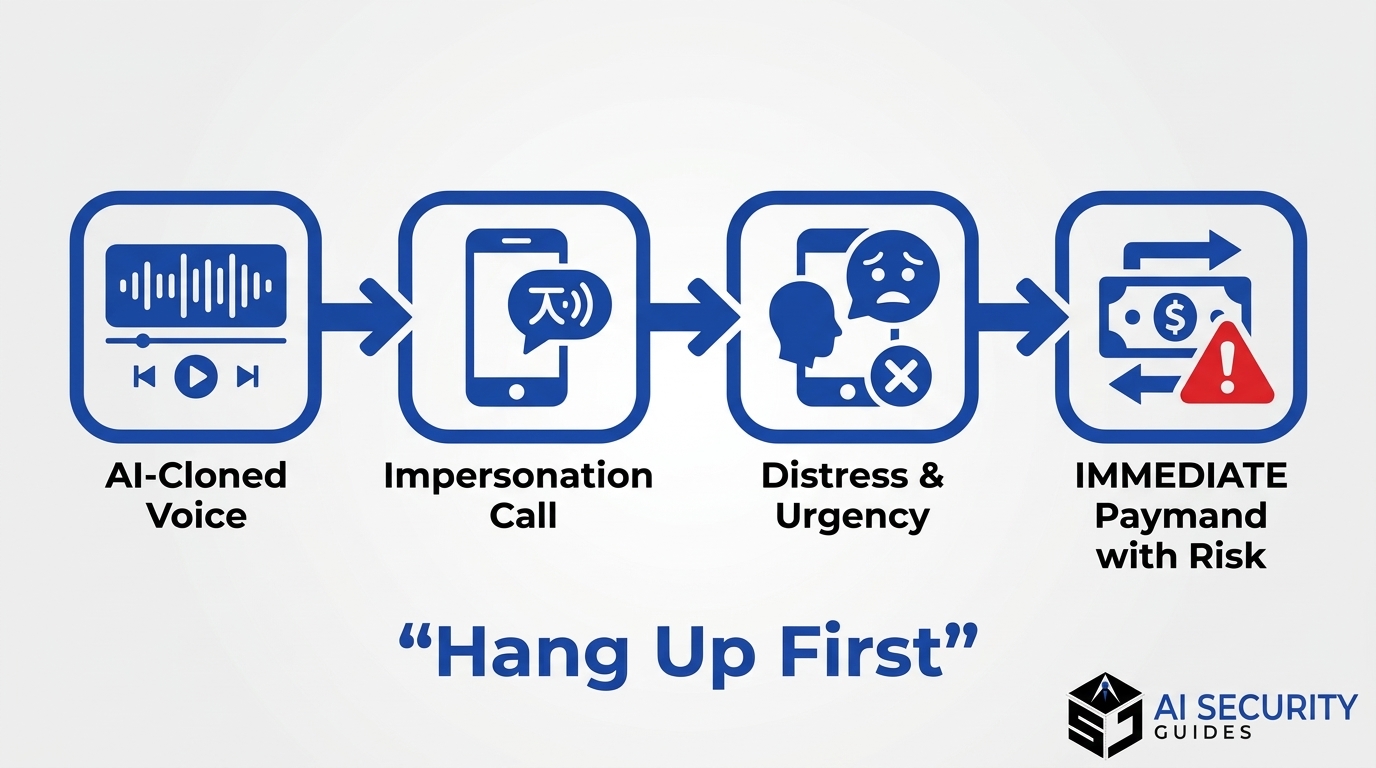
Hypothetical example: Maria, a retired teacher, gets a call from a voice that sounds exactly like her nephew. He claims he was in a car accident and needs bail money. Maria hangs up and calls his number from her contacts. He answers from work, unaware of the call, and the scam collapses.
Deepfakes and Convincing Phishing Messages
Phishing remains a major route for AI scams targeting older adults. Phishing means a message designed to trick you into clicking a link or sharing private details. Modern versions copy a company’s logo and writing style, so typos no longer give them away. Deepfakes, which are AI-generated videos that imitate real people, can show a trusted figure promoting a fake investment. Start with our guides on how to check a suspected deepfake video and AI phishing emails that look polished.
Examples of AI Scams Targeting Older Adults
Real examples help you recognize new versions of old tricks. The three examples below are hypothetical, but they reflect patterns consumer agencies commonly report.
Hypothetical phone example: A caller claims to be a grandson stranded abroad. He asks you to wire money within the hour and begs you not to tell his parents.
Hypothetical text example: A message says a package delivery failed and asks you to pay a small fee through a link. The link leads to a page that collects your card number.
Hypothetical video example: A video shows a financial expert recommending a cryptocurrency platform with guaranteed returns. The expert never agreed to appear, and the video was generated with AI.
Warning Signs of AI Scams Targeting Older Adults
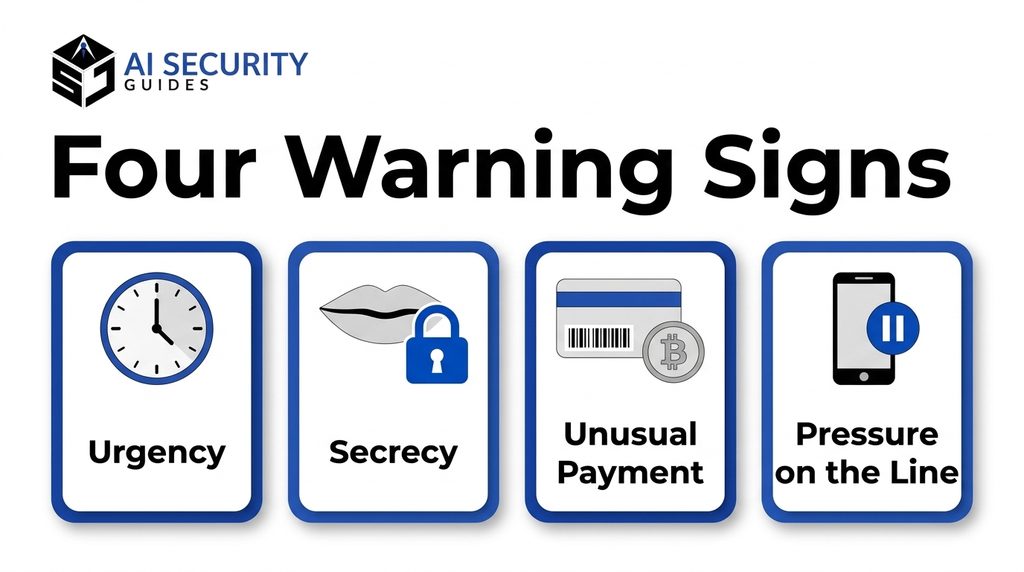
Most AI scams share a common pattern, and these signs appear across nearly all AI scams targeting older adults. Watch for four signals:
- The caller demands action within minutes.
- The caller asks you to keep the call secret.
- The request involves gift cards, cryptocurrency, or wire transfers.
- The caller discourages you from hanging up or calling anyone else.
A familiar voice does not prove identity. Verify the request instead of trusting how it sounds.
How Families Can Prevent AI Scams Targeting Older Adults
Families who plan ahead make AI scams targeting older adults far less effective. Set up these habits now, before a suspicious call arrives.
Create a Family Code Word
Choose a word or phrase that appears nowhere online. Ask relatives to provide it whenever they request emergency help. If a caller cannot provide it, treat the call as a scam. Keep the word out of texts and social media.
Agree on Callback Rules
Callback rules block most AI scams targeting older adults because they break the caller’s control of the conversation. First, hang up, even if the voice sounds real. Next, call the relative using a number already saved in your phone. If nobody can confirm the story, do not send money. The Federal Trade Commission’s guidance on family emergency scams recommends this same approach.
Protect Social Media Privacy
Scammers collect details from public posts, including family names, travel plans, and voice recordings. Review your privacy settings and limit who can view your videos. Our guide to social media privacy settings walks through each step.
Precautions Against AI-Generated Phone Scams
The most important precaution is simple: never send money based on an unexpected phone call alone. Hang up, then call the person back using a number you already have saved. Keep a family code word, and avoid sharing personal details during unsolicited calls. You can also let unknown numbers go to voicemail. Treat any caller who pressures you to stay on the line as a warning sign.
Comparing Common Scam Types
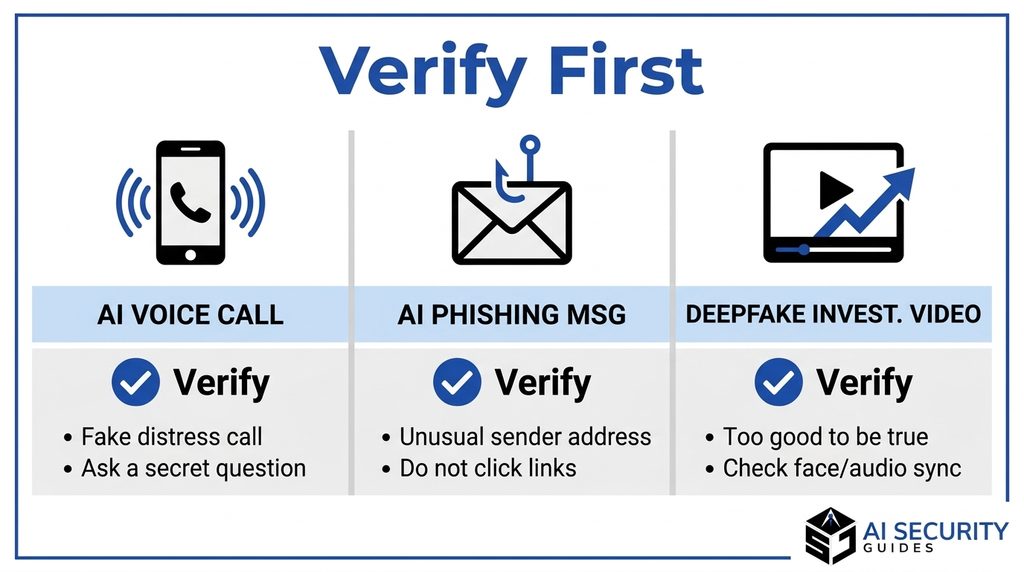
The table below compares three common scam types. Use it to recognize their differences quickly.
| Scam type | How it starts | Typical request | Best first response |
|---|---|---|---|
| Voice cloning emergency call | Urgent call that sounds like a relative | Bail, medical, or travel money | Hang up and call the relative directly. |
| AI phishing message | Message posing as a bank or agency | Click a link or enter login details. | Visit the official website or app yourself. |
| Deepfake investment video | Video of a trusted figure promoting returns | Deposit into a new trading platform. | Research the company and consult your advisor. |
Notice the pattern: every one of these AI scams targeting older adults pushes you toward speed. The safest response is always to slow down and verify through a separate channel.
Steps to Take After AI Scams Targeting Older Adults
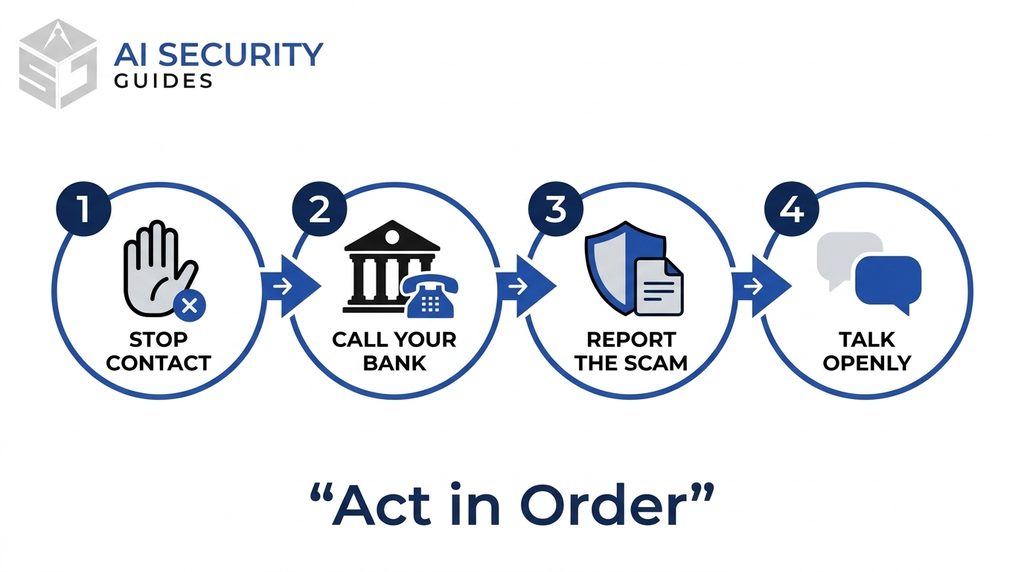
If your family has already faced AI scams targeting older adults, act quickly. Never send more money while a scam is still unfolding. First, stop all contact with the caller. Next, call your bank, card issuer, or payment app using a number from its official website. Then report the crime at ic3.gov and to the Federal Trade Commission at reportfraud. ftc.gov. Finally, talk with the person without blame, because shame keeps victims silent.
Family Checklist Against AI Scams Targeting Older Adults
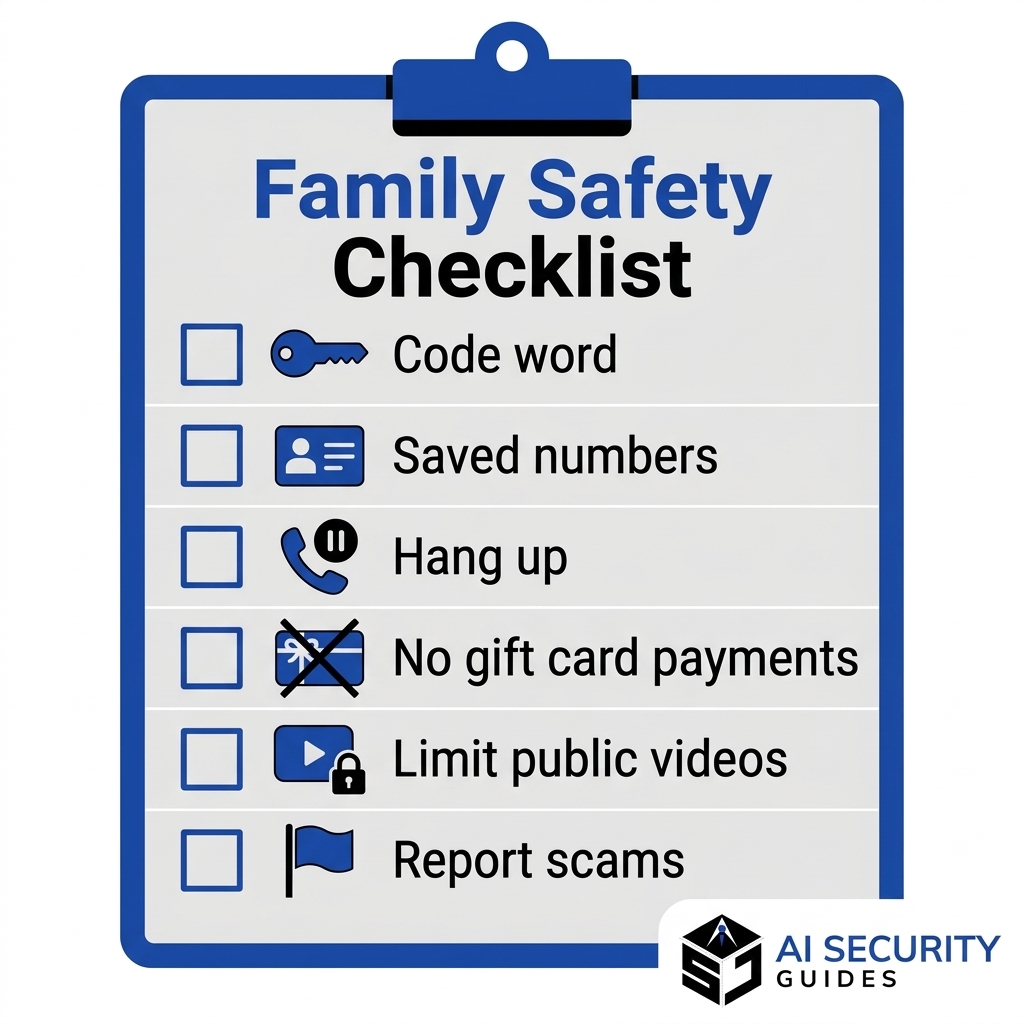
Print this list and keep it near your phone:
- Agree on a family code word and share it only with close relatives.
- Save every relative’s number under a clear name in your contacts.
- Hang up on urgent money requests, then call back on a number you know.
- Refuse any payment request involving gift cards, wire transfers, or cryptocurrency.
- Limit public videos and voice recordings on your social media accounts.
- Report suspected scams to ic3.gov and report fraud. ftc.gov.
Frequently Asked Questions About AI Scams Targeting Older Adults
Are AI scams targeting older adults increasing in 2026?
Yes. Official data shows that AI scams targeting older adults grew sharply in 2025, the latest full year reported. Many victims never report, so official totals likely understate the problem.
How did scams targeting seniors change from 2024 to 2025?
Reported losses from people 60 and older rose roughly 60 percent in 2025 compared with the year before, according to FBI data summarized by AARP. Complaints also increased, which suggests more families are encountering these scams.
How can I tell a cloned voice from the real one?
Often you cannot tell by listening alone, because modern clones sound very convincing. Look for pressure and secrecy instead. The most reliable test is to hang up and call the person on a number you already know.
What should I do if I already sent money?
Contact your bank or payment provider right away and ask whether the transfer can be stopped. Then report the transaction to ic3.gov and the Federal Trade Commission. Keep every message, phone number, and receipt as evidence.
Where should I report an AI scam?
Report it to the FBI’s Internet Crime Complaint Center at ic3.gov and to the Federal Trade Commission at reportfraud. ftc.gov. Local police can also take a report. For more reading on specific threats, browse our AI scams articles.
Conclusion: Protecting Older Adults From AI Scams
AI scams targeting older adults rely on urgency and emotion. You can break that pressure with a few simple habits. Agree on a family code word, use callback rules, and treat unusual payment requests as warning signs. Start the conversation at your next family gathering, because one short talk can prevent a costly mistake.