

AI voice cloning scams can make a stranger sound exactly like your child, your boss, or your best friend. The call feels urgent, the voice feels familiar, and the request feels real. Together, those three feelings push many people to act before they think.
Hypothetical example: Your phone rings at 9 p.m. A sobbing voice that sounds like your daughter says she crashed her car and needs bail money now. She begs you not to tell anyone. Naturally, you want to help immediately, and the caller counts on that.
This guide explains how these calls work, which warning signs matter most, and how to verify a call safely. Next, you will get a short checklist and answers to common questions. For a broader view of online fraud, read our guide to AI scams.
Table of Contents
- How AI Voice Cloning Scams Work
- Common Types of AI Voice Cloning Scams
- Warning Signs of AI Voice Cloning Scams
- How to Verify a Call and Stop AI Voice Cloning Scams
- What to Do If You Already Sent Money
- How to Reduce Your Risk of AI Voice Cloning Scams
- Real Call vs. AI Voice Cloning Scams: A Quick Comparison
- Verification Checklist You Can Save
- Frequently Asked Questions About AI Voice Cloning Scams
- Conclusion: Stay Ahead of AI Voice Cloning Scams
How AI Voice Cloning Scams Work
Voice cloning is software that studies a recording of someone’s voice and then generates new speech in that voice. Scammers type a script, and the tool reads it aloud. The Federal Trade Commission (FTC) warns that a scammer needs only a short audio clip and a voice-cloning program to imitate someone you love.

A typical scam follows four stages. First, the scammer finds a voice sample online, and next, the software generates a cloned voice. Then the scammer calls you with an emergency story. Finally, the caller pushes you to send money quickly.
In other words, AI voice cloning scams pair an old trick with new technology. The story stays familiar: an emergency, a secret, and a request for money. However, the cloned voice removes your first instinct to doubt.
Where Scammers Find Audio for Voice Cloning
Scammers collect voice samples from places people share freely. For example, public videos, social media posts, podcasts, and voicemail greetings can all supply audio. They also gather names, relatives, and travel plans from public profiles.
As a result, the caller can mention real details that make the story believable. Our guide on how to protect your personal information online shows how to shrink that public trail.
Why a Cloned Voice Sounds So Convincing
Your brain trusts familiar voices. When you hear your son’s tone, you stop analyzing and start reacting. In addition, scammers often add panic, such as crying or shouting, to keep you from thinking clearly.
Even the FBI warns that AI-generated voice clones can sound nearly identical to real contacts. Therefore, your ears alone cannot protect you.
Common Types of AI Voice Cloning Scams
AI voice cloning scams change their stories, but they follow a few repeating patterns. If you learn these patterns, you will spot new versions faster.
Family Emergency Calls
In this version, the caller claims to be a child, grandchild, or sibling in trouble. For instance, the story might involve an accident, an arrest, or a stranded trip. Additionally, many versions beg you not to tell anyone. The FTC treats this as an AI-enhanced version of the classic family emergency scam.
Fake Boss or Vendor Requests
Businesses face the same tactic. A cloned voice of a manager may ask an employee to pay an invoice, buy gift cards, or share a login code. Small teams can be easy targets because everyone knows the owner’s voice.
Hypothetical example: An accounting clerk gets a call from “the owner,” who demands an urgent vendor payment. The clerk says she will confirm in the company chat app, hangs up, and messages the real owner. The owner never made the call.
Few teams have a rule for verifying unusual requests, so AI voice cloning scams can slip through. Our small business cybersecurity checklist covers the basics every team needs.
Bank and Government Impersonation
Some callers pretend to work for your bank’s fraud department or a government agency. Likewise, the FBI has warned that criminals use AI-generated voice messages to impersonate officials and reach personal accounts. Therefore, treat any unexpected call that asks for codes or money as suspicious.
Security experts call this phone-based phishing “vishing.” If you want a refresher on the email version, read what phishing is and how to spot it.
Warning Signs of AI Voice Cloning Scams
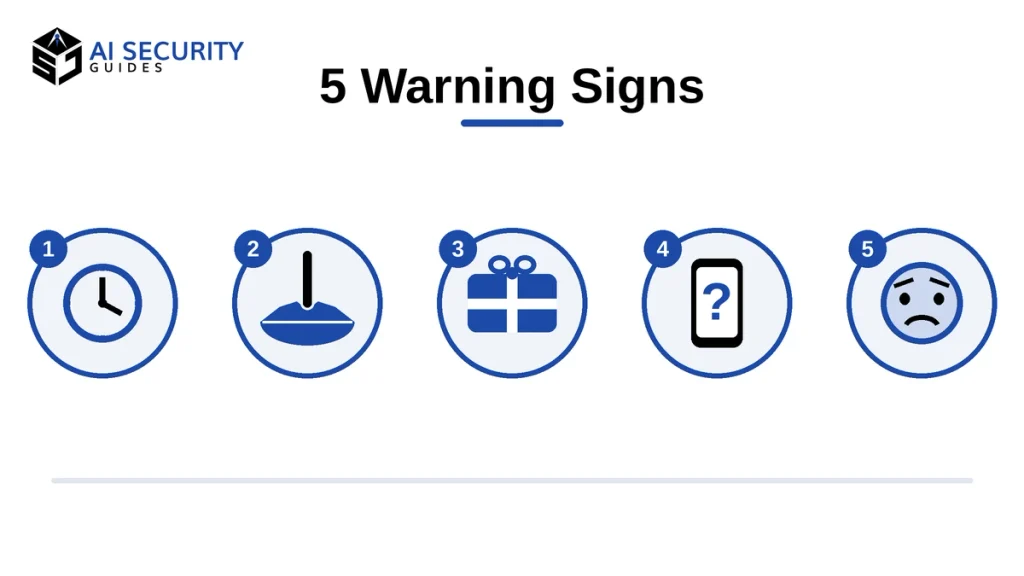
No single clue proves a call is fake, because a cloned voice can sound flawless. Instead, watch the situation around the voice. These warning signs of AI voice cloning scams appear again and again.
Pressure, Secrecy, and Panic
Scammers want you to act fast. They say things like “Don’t hang up” or “Don’t tell Mom.” As a result, urgency and secrecy stop you from checking the story. Any call that demands instant action and silence deserves a pause.
Payment Requests That Are Hard to Reverse
Pay attention to how the caller wants the money. The FTC says requests to wire money, send cryptocurrency, or buy gift cards are signs of a scam. In fact, real emergencies rarely require you to read gift card numbers over the phone.
Odd Details in Cloned-Voice Calls
Watch for small oddities. The caller may use a new phone number, avoid personal questions, or refuse a video call. A real relative usually welcomes your questions. In contrast, a scammer deflects them and returns to the money request.
Audio Clues You Should Not Rely On
Robotic pauses, odd breathing, or flat emotion can hint at a fake. However, scammers improve their tools constantly, so a natural voice proves nothing. The FBI also says AI-generated content is often hard to identify.
Therefore, base your decision on verification instead of sound. The same rule applies to video, so see how to check a suspected deepfake video.
How to Verify a Call and Stop AI Voice Cloning Scams
Verification beats detection. You do not need to decide whether the voice is real. Instead, you only need to confirm the person through a trusted route.
Hang Up and Call Back on a Known Number
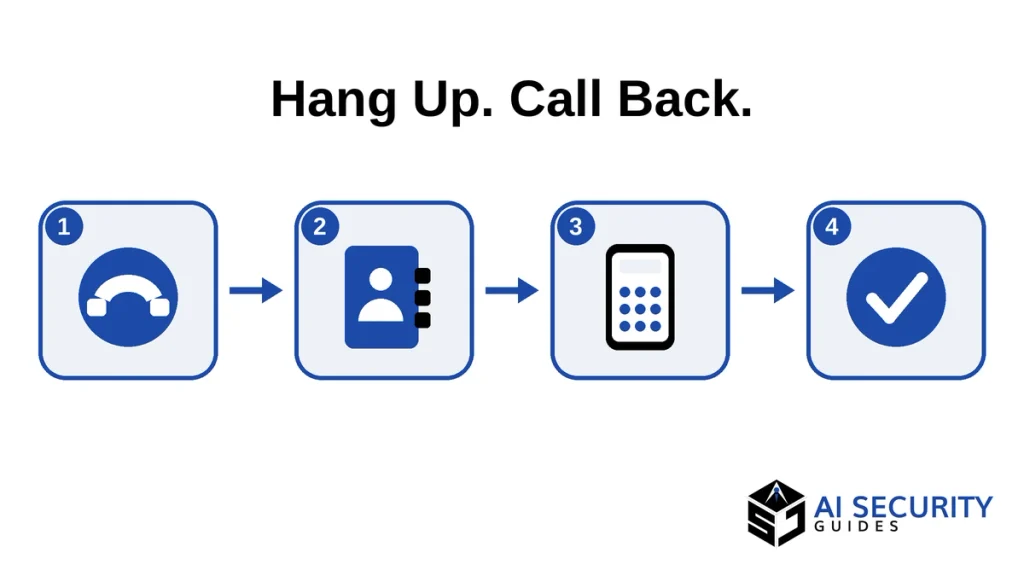
First, end the call. Then dial the person using the number saved in your contacts, not one the caller gave you. The FTC advises using a number you know belongs to that person to verify the story.
If a caller pushes back, stay calm and say, “I will call you right back.” Then hang up without arguing. Besides, a real relative will understand your caution.
If they do not answer, text them or contact a relative or friend who can reach them. Remember that caller ID can mislead, so never treat it as proof.
Set Up a Family Code Word
A code word is a secret word or phrase that only your family knows. The FBI recommends using a secret phrase to confirm identity. Choose something random, such as two unrelated words, and avoid anything public, like a pet’s name.
Hypothetical example: Your “grandson” calls and asks for money. You ask for the code word. He stumbles and changes the subject. You hang up and call his real number.
Confirm Through a Second Channel
Use a different method than the one that reached you. For example, if the request came by phone, confirm by text, video call, or a message to another relative. At work, check with the person directly or through your company’s chat app.
In addition, never read a verification code aloud to a caller. Multi-factor authentication (MFA) adds a second login step, but scammers can still trick you into handing over the code.
What to Do If You Already Sent Money
Act quickly if you already paid a caller. The steps below help you limit the damage.
- Contact your bank, card issuer, or payment app and report the fraud.
- Ask whether they can stop or reverse the transaction, because speed matters.
- Save call logs, screenshots, receipts, and card numbers.
- Report the scam to the FTC at ReportFraud.ftc.gov and to the FBI’s Internet Crime Complaint Center (IC3).
- Warn your family, and change any passwords you shared.
Do not feel embarrassed. These calls fool careful people because they target emotion, not intelligence. Reporting also helps investigators spot patterns.
How to Reduce Your Risk of AI Voice Cloning Scams
Limit the Audio You Post Online
You cannot hide your voice completely, but you can reduce how much strangers hear. For instance, set social accounts to private, trim public videos, and avoid sharing voicemail greetings widely. Also check the privacy settings on accounts that belong to children and older relatives.
Our AI safety checklist offers more everyday habits for using AI tools safely. These small changes will not stop every attempt. However, they give scammers less material to work with.
Lock Down Your Accounts
Scammers often pair a cloned voice with stolen personal details. Therefore, use a password manager to create strong, unique passwords, and turn on MFA wherever possible. Then talk with older relatives about these scams. A five-minute conversation can prevent a costly mistake.
Make a Family Plan Against Voice Cloning
Preparation turns panic into routine, and it blunts AI voice cloning scams before they start. Sit down with your family for ten minutes. Agree on three rules: use a code word, call back on saved numbers, and never send money after one call. Finally, write them down and keep them somewhere easy to find.
Real Call vs. AI Voice Cloning Scams: A Quick Comparison
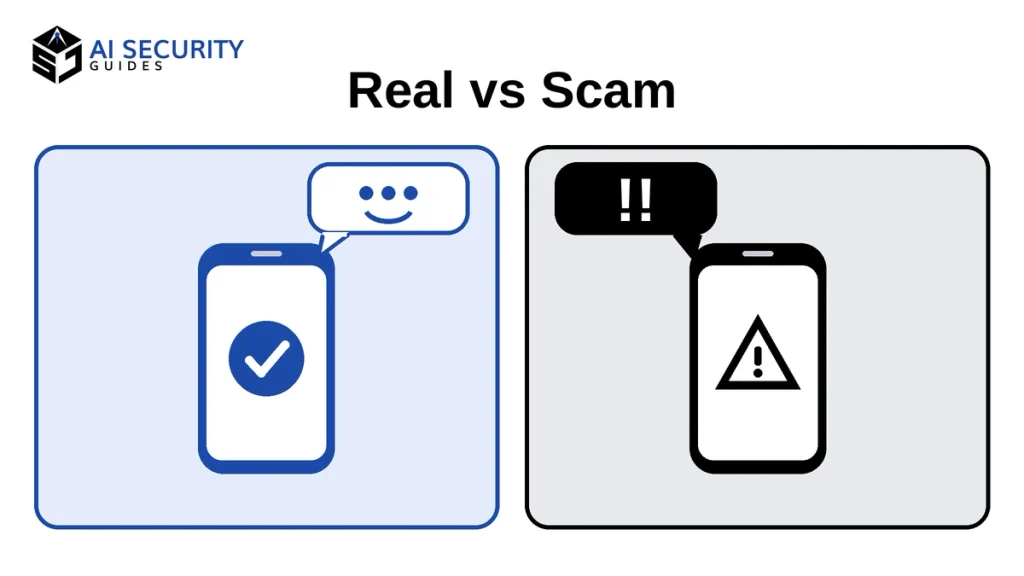
Use this table when you feel unsure. It shows how a normal call usually differs from AI voice cloning scams.
| Situation | Typical real call | Typical scam call |
|---|---|---|
| Urgency | You have time to talk and check | Demands action right now |
| Secrecy | Welcomes you contacting others | Begs you to tell no one |
| Payment | Normal channels or no payment | Gift cards, wire transfers, crypto |
| Verification | Caller accepts a call back | Caller refuses or hangs up |
| Number | Matches a contact you saved | Unknown or spoofed number |
Verification Checklist You Can Save
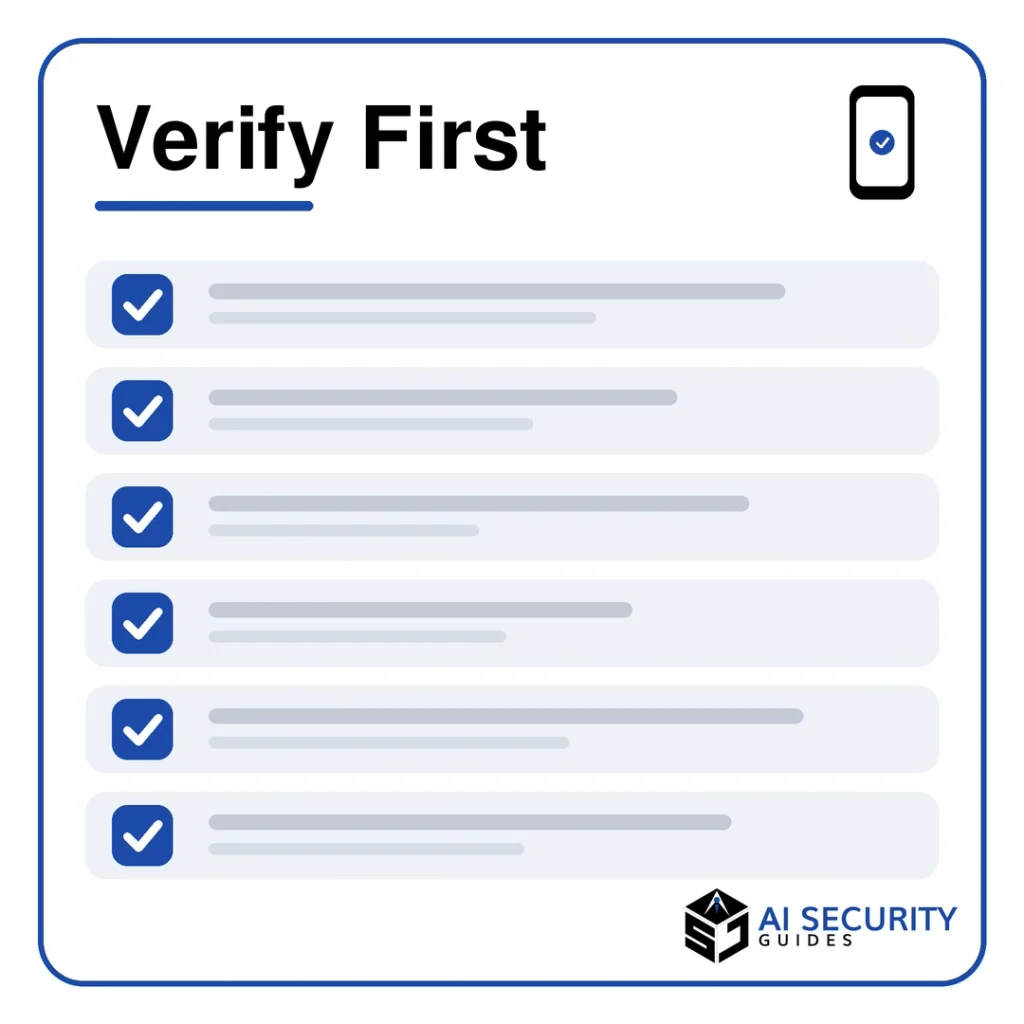
Screenshot this list and share it with your family. Best of all, each check takes only seconds.
- Stay calm, and do not share money, codes, or personal details during the call.
- Hang up and call back using a saved number.
- Ask for your family code word.
- Message a second relative or friend.
- Refuse gift cards, wire transfers, and cryptocurrency.
- Save the details and report the scam at ReportFraud.ftc.gov.
Frequently Asked Questions About AI Voice Cloning Scams
Can AI Voice Cloning Scams Work With a Short Audio Clip?
Yes. The FTC says a scammer needs only a short clip of someone’s voice, which often comes from content posted online. Therefore, assume any public recording could become a sample.
How Can I Tell a Cloned Voice From a Real One?
Often, you cannot, even if you listen closely. Instead, focus on verification. Hang up, call back on a known number, and ask for your code word.
Does Caller ID Prove a Call Is Real?
No. Scammers can fake caller ID, a technique that experts call spoofing, so a familiar name or number proves nothing. Instead, call back using the contact saved in your phone.
Do AI Voice Cloning Scams Target Businesses?
Yes. Criminals can imitate executives or vendors to request payments or account access. Therefore, teams should adopt one rule: any payment or password request by phone needs approval through a second channel.
What Should I Do If I Answered a Suspicious Call?
Hang up, and do not press buttons or share any information. Then block the number. If you shared a code or password, change it immediately and contact your bank.
Should I Answer Unknown Calls?
You may answer, but you can also let unknown calls go to voicemail. Real contacts usually leave a message. Afterward, verify any urgent message by calling back on a known number.
Conclusion: Stay Ahead of AI Voice Cloning Scams
AI voice cloning scams succeed because they turn love and loyalty into pressure. You cannot always trust the voice, but you can always trust a verified call. Agree on a code word, hang up and call back, and confirm through a second channel before sending money. Then share these steps with the people who would worry most when the phone rings.